entry #12: glhf-chess
Picked the project back up after a few weeks away and spent the first
day deleting things. An over-engineering pass got me
176 lines lighter: fifteen near-identical blocks
collapsed into one, two movement types merged, and the
Queen removed entirely — there was no way to actually
get one, in a loadout or a pull or a promotion.
Then the things that had been failing quietly. A save interrupted
halfway can no longer corrupt the file. A bad join code gets rejected
instead of sitting on "Connecting..." forever. Someone who leaves
forfeits rather than freezing the game for whoever stayed. After that,
three bigger systems: online play over a relay with
Find Match and join codes, since nobody was going to read an IP
address out to a friend; picking a match back up
after the phone sleeps; and accounts with progress saved to
the cloud, where a real conflict between two devices gets a
"pick your progress" screen rather than a guess.
The shape change I had been avoiding. The board went from 5x6 to
7x8, with a six-unit loadout around the king and a
two-square first move for pawns. The old board was fine for testing
the engine and bad for playing — nowhere to develop into, and no room
for a loadout to mean anything. Three units came in with it, and the
Frost Mage was immediately too strong and got nerfed
by the end of the week.
The rest was clarity. The board flips for Player Two
online, and the piece info panel writes itself from the unit
definitions, so a unit's page cannot drift out of sync with
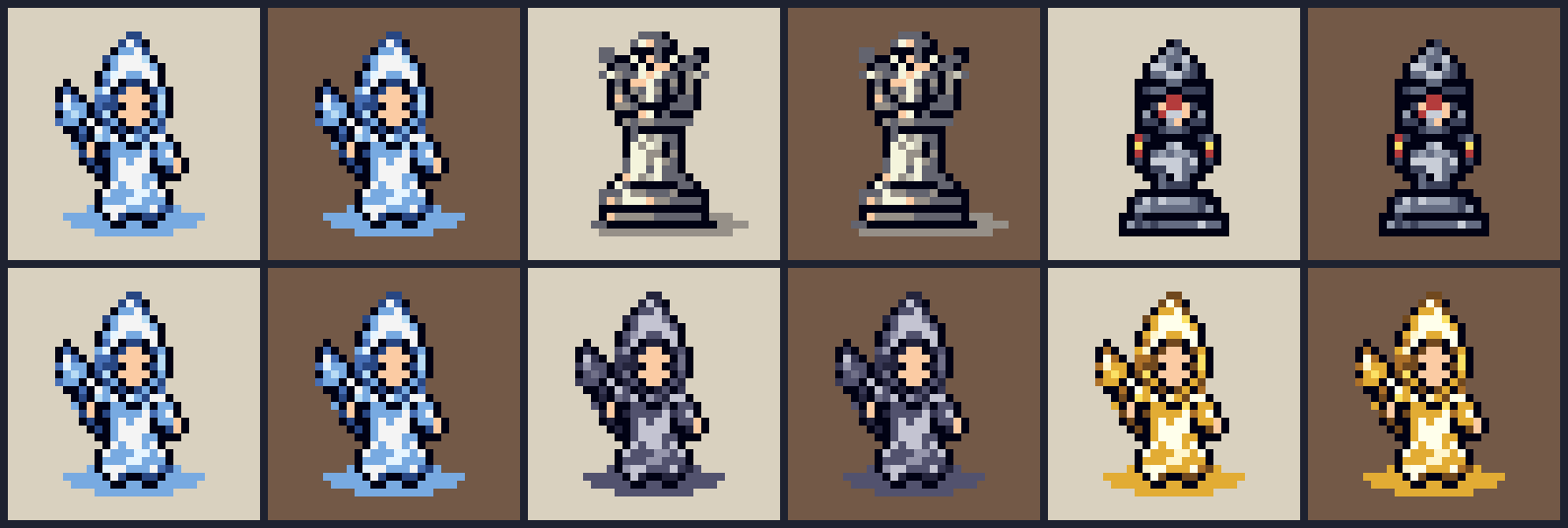
its rules. Every piece also switched to a pixel set,
which took a few goes. The first directions were too detailed — little
RPG sprites with robes and staves, great at four times the size and
noise on a phone.
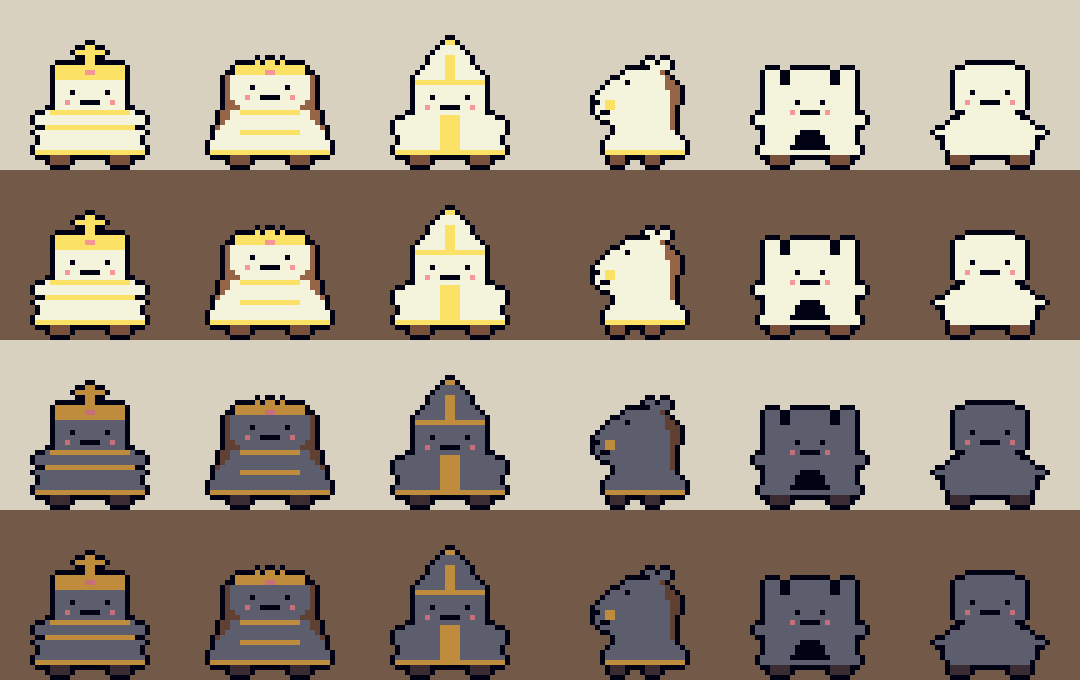
What worked was blunter and rounder: one readable silhouette per unit, two team colours, and no detail that does not survive being shrunk to a square.
The biggest week so far, in two directions: making it look like a
game, and making it safe to be one. The look was a
Cosy Board style layer across every screen, a
Collection page, per-piece skins, and board themes won from the pull.
The economy got rebuilt around one pull for both units and
skins, with skins as the rare thing at 7.3% — which meant
shipping the real-world bits too: ads, a consent prompt, a privacy
policy and a signed store build.
Then the part that mattered most. The server owns the economy
now, and exactly one place in the game may change what a
player owns. When the server answers, its numbers
replace what is on the device rather than merging
into it — merging would mean anything someone edited into their own
save survived forever. One consequence: the server only pays out for a
match it can see, so local matches no longer pay.
The end of the month was almost all roster, with a rule for it: each new unit has to claim a verb the roster does not already have. Not a stat line, a verb. That turned "add more units" into a checklist of things the game could not yet do — the Tide (a square your opponent cannot stand in), the Hostage-taker (conversion), the Mirror (it moves as whatever you just moved), plus the first support piece and the first unit that grows. The pace only worked because the engine is data-driven, and because the self-play bot found a pawn bug in the Tide I would not have hit by hand for weeks. I also built a shared library of faces so the new units read as one set.
